Interoperability for Neighbourhoods
Updated: Jul 9

Neighbourhood working is a major focus across the NHS. It’s the right direction, care closer to home, more coordinated support and a stronger focus on population health at a genuinely local level.
As neighbourhoods are established there will be an increasing need to provide data to and from smaller, less digitally mature, organisations. This doesn’t have to be a problem as long as it is addressed now, before major neighbourhood decisions are made.
Neighbourhoods don’t own interoperability, they inherit it. More often, they inherit the lack of it.
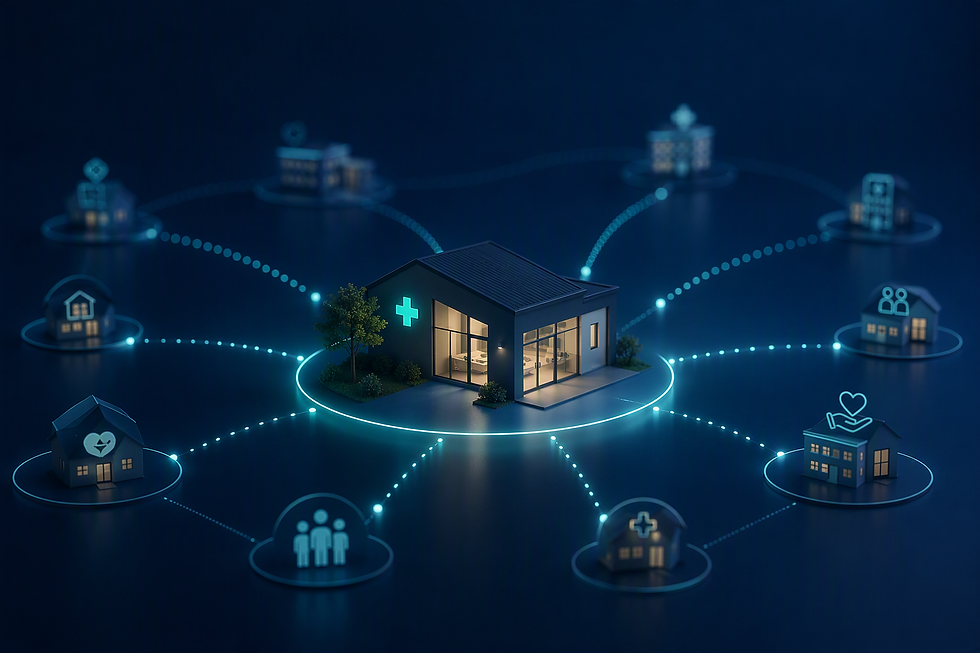
At neighbourhood level, care is delivered across a mix of organisations: GP practices, community services, mental health teams, local authority teams and voluntary sector providers. Each has its own solutions, its own ways of working and its own data structures. The ambition is integration, but the reality is often fragmentation.
In practice, that means:
Clinicians piecing together information across multiple systems
Referrals relying on email, phone calls or PDF attachments
Limited visibility of what’s happening around the patient
Delays in decision making at exactly the point where speed matters most
Neighbourhood working increases the need for NHS interoperability, but it also exposes where it is weakest.
Most interoperability strategies still operate at ICS or organisational level. Shared care records, EPR programmes and data platforms all play an important role, but neighbourhoods do not operate at that level. They operate at the level of real pathways, real patients and day-to-day coordination across teams.
So the question becomes: how do you make interoperability work where care actually happens?
It isn’t about building another large platform.
It’s about:
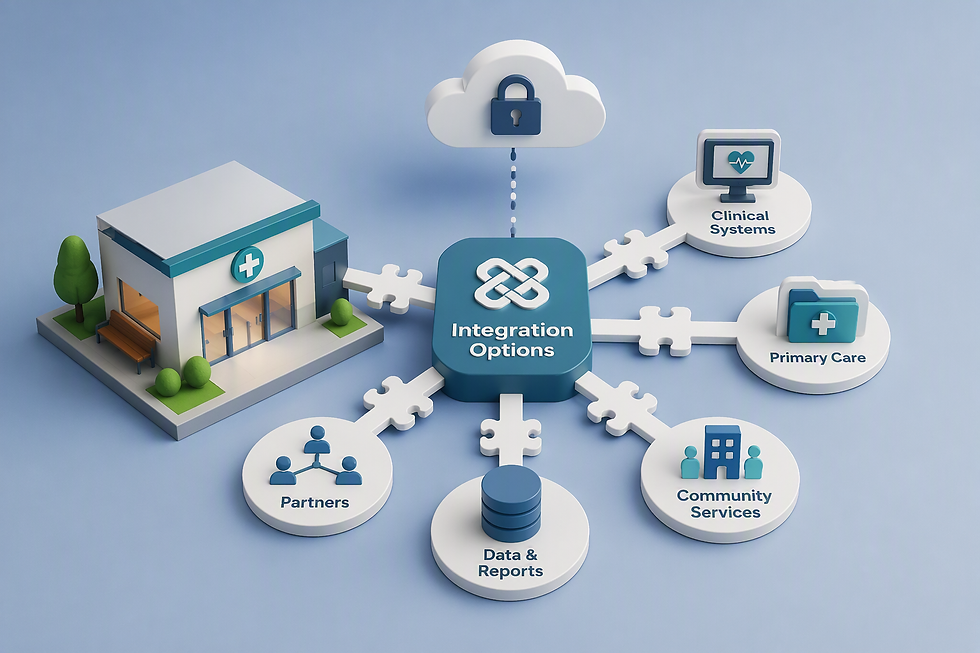
Connecting the specific systems involved in neighbourhood care pathways
Enabling real-time clinical data sharing, not next-day or batch-driven updates
Supporting the way teams already work, rather than forcing them into new tools
Focusing on practical use cases such as referrals, alerts, discharge and coordination
Effective healthcare interoperability at neighbourhood level is smaller in scope, but far sharper in impact.
It also has to be adaptable. Neighbourhood models vary, teams evolve and services change. A rigid architecture will not keep up with that reality.
This is where a more practical approach matters.
Making interoperability work at neighbourhood level means focusing on the point of care, connecting the systems that matter, enabling timely data flow and ensuring that information is accessible through simple, user-facing views that support real clinical decision making.
It’s not about adding another layer of complexity. It’s about quietly making things work better, where it matters most.
At Osprey, we believe neighbourhood working will only deliver its full potential when the flow of information matches the flow of care. We help organisations create practical, real-time interoperability that connects the services involved in neighbourhood pathways, ensuring the right information reaches the right people at the right time.
By focusing on specific use cases and measurable outcomes, we help turn neighbourhood integration from an ambition into something that genuinely supports carers, improves coordination and benefits patients.
Related Solution: ICB Shared Data & Connectivity Solutions
Neighbourhood-based care relies on information flowing effectively between organisations, services and professionals. Learn how Osprey helps create the data-sharing foundations needed to support integrated care at a local level.