
Why Suppliers Should Think About Interoperability Earlier
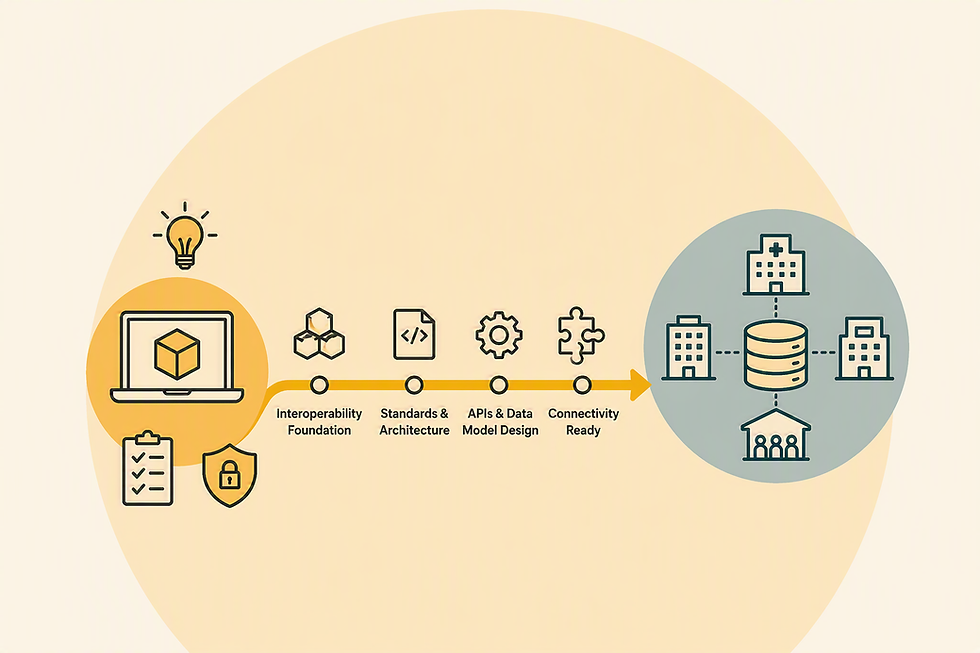
Many suppliers begin thinking seriously about interoperability when a customer asks for it.
A procurement opportunity appears. A prospective customer requests an interface. A new market opportunity emerges. Suddenly, interoperability becomes a priority.
While this approach is understandable, it can sometimes make interoperability more difficult than it needs to be.
The most successful suppliers often start considering interoperability much earlier, long before the first integration request arrives.
Interoperability Is Easier to Design Than Retrofit
When products are first being designed, suppliers have significant flexibility.
Data models can be shaped appropriately. Workflows can be refined. Architectural decisions can be made with future requirements in mind.
As products mature, changes become harder to implement.
Decisions that made perfect sense during early development can create challenges later when interoperability requirements emerge.
The issue isn't that interoperability becomes impossible, it simply becomes more complicated.
Future Requirements Are Predictable
Individual interoperability requirements may not be known in advance, but the need for interoperability often is.
Healthcare organisations increasingly expect solutions to:
Exchange information
Support data sharing
Integrate with existing systems
Fit within broader digital strategies
Suppliers may not know exactly which systems they will connect to, but they can reasonably expect that interoperability will form part of the future landscape.
Recognising this early often helps create more flexible and scalable products.
Interoperability Influences Adoption
Products that are easier to integrate are often easier to adopt.
Organisations naturally prefer solutions that fit into existing environments with minimal disruption.
By considering interoperability requirements early, suppliers can reduce future barriers and create smoother implementation journeys for customers.
Small Decisions Have Long-Term Impact
Many interoperability challenges can be traced back to relatively small decisions made early in product development.
Data structure
Identity handling
Workflow assumptions
Security models
None of these choices are necessarily wrong, but they can influence how easily a product connects to wider environments later.
A modest investment in interoperability thinking early on can often prevent significant effort later.
How Osprey Can Help
Osprey helps suppliers establish practical interoperability foundations from the outset, helping organisations make informed decisions that support future connectivity, onboarding and adoption.
Related Solution
Future-ready architecture designed to simplify connectivity and support long-term digital transformation.


